


A New Dawn for Hepatitis B Treatment: Can mRNA and Gene Editing Deliver a Cure?
Introduction
Chronic Hepatitis B Virus (HBV) infection affects nearly 300 million people worldwide and is a leading cause of cirrhosis and liver cancer. While current nucleos(t)ide analogues effectively suppress viral replication, they rarely achieve a "functional cure"—defined as sustained loss of hepatitis B surface antigen (HBsAg) after stopping therapy, with or without seroconversion to anti-HBs. A recent comprehensive review published in Advanced Drug Delivery Reviews systematically outlines the groundbreaking advances in next-generation HBV therapeutic strategies, particularly mRNA vaccines and gene editing, while candidly dissecting the formidable scientific, regulatory, and commercial hurdles that must be overcome before these innovations reach patients. This article provides an overview of the opportunities and challenges in this cutting-edge field.
Next-Generation Therapies: From Immune Reactivation to Genomic Eradication
The review identifies two primary strategic pillars in the current development pipeline:
-
Immune Reconstitution and Activation: Aimed at reversing the state of "exhaustion" in the host immune system during chronic infection.
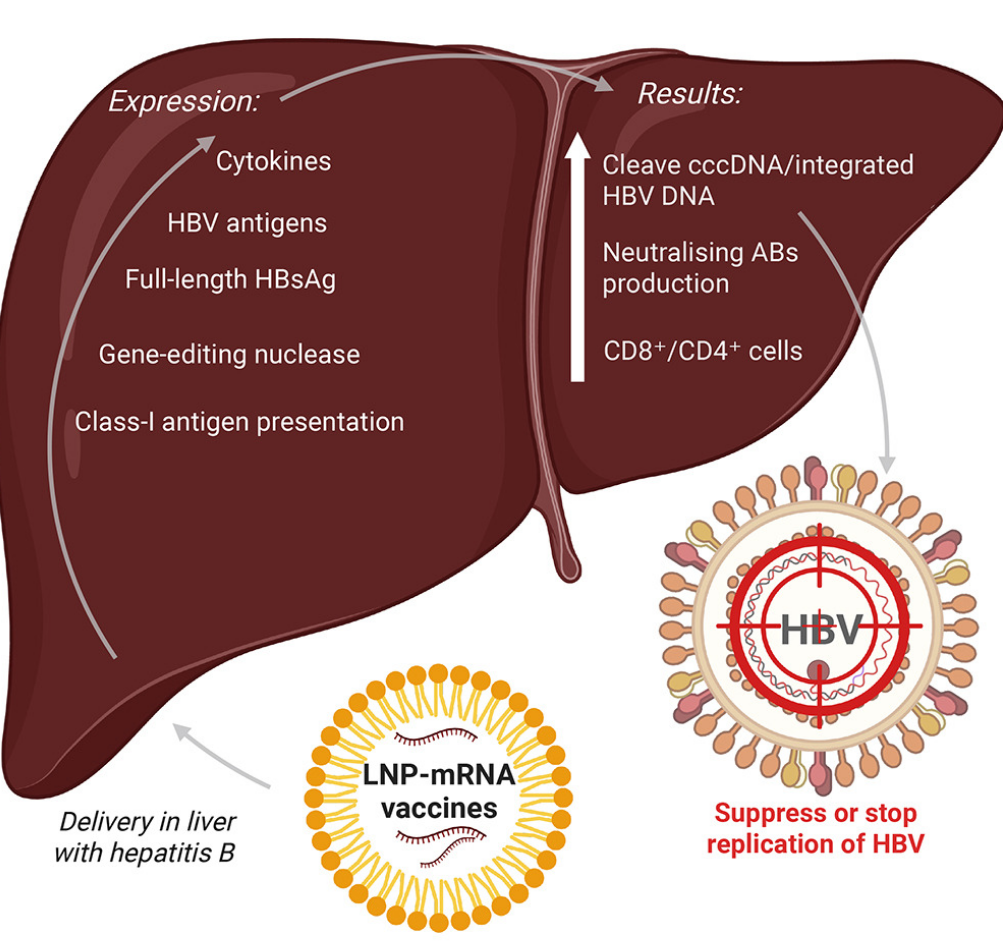
- Therapeutic mRNA Vaccines: As a star technology, mRNA vaccines can efficiently deliver instructions encoding HBV antigens (e.g., S, C, X proteins) into human cells, inducing potent and multi-specific T and B cell responses. The self-amplifying RNA (saRNA) platform is particularly promising, as its ability to self-replicate intracellularly allows for stronger and more durable immune responses at lower doses. The goal extends beyond viral control to eliminating infected hepatocytes and establishing long-term immune memory.
- Other Immunomodulators: These include checkpoint inhibitors (e.g., PD-1/PD-L1 antibodies) and TLR agonists, designed to directly "reawaken" dysfunctional HBV-specific T cells.
-
Direct Targeting of the Viral Genome: Aims to destroy or silence the covalently closed circular DNA (cccDNA)—the persistent viral reservoir established in the nucleus of hepatocytes.
- Gene Editing Technologies: Tools like CRISPR-Cas9, exemplified by candidates such as PBGENE-HBV, can precisely cut and disrupt cccDNA or integrated HBV DNA, offering a theoretical path to permanent viral eradication. This approach comes closest to the concept of a "complete cure."
- RNA Interference (RNAi) & Antisense Oligonucleotides (ASOs): These agents work by degrading viral mRNA, thereby potently suppressing the expression of all viral proteins (including HBsAg). This creates an "antigen shock" window, allowing the immune system a chance to recover.
A Bright Future, But a Thorny Path Ahead
Despite the exciting potential demonstrated in preclinical and early clinical trials, the authors clearly state that translating these advanced technologies into safe and effective clinical products faces significant challenges.
-
Safety Considerations:
- Off-Target Risks of Gene Editing: For gene-editing therapies like PBGENE-HBV, the primary concern is the potential for unintended cuts at non-target genomic sites (off-target effects) and the uncontrolled integration of edited DNA fragments, which could lead to oncogenic mutations. This necessitates extremely rigorous preclinical safety profiling and long-term patient monitoring in clinical trials.
- Immunopathology Risk from Immunotherapies: Potently activated T cells, while clearing infected hepatocytes, can also trigger severe liver inflammation (hepatic flares), especially in patients with high viral loads or pre-existing liver damage. Therefore, precise dosing and stringent patient selection criteria are critical.
-
Efficacy Barriers:
- Depth of T Cell Exhaustion: In many chronic HBV patients, HBV-specific T cells are profoundly exhausted or even deleted, particularly in older individuals or those with high antigen loads, leading to poor response rates to immunotherapies. Overcoming this may require personalized combination regimens, such as using RNAi/ASOs first to drastically reduce antigen levels, followed by an mRNA vaccine for immune reconstitution.
- The Resilience of cccDNA: cccDNA is exceptionally stable within the hepatocyte nucleus, and its minichromosome structure renders it naturally resistant to many drugs. Efficiently and completely eliminating or permanently silencing cccDNA remains the ultimate challenge for all direct antiviral strategies.
-
Regulatory and Commercial Challenges:
- Defining and Validating "Functional Cure": Regulatory agencies (e.g., FDA, EMA) require proof that HBsAg remains undetectable for a prolonged period after treatment cessation. This demands clinical trial designs with extended follow-up periods (often 1-2 years or longer), significantly increasing R&D costs and timelines.
- Evolving Regulatory Frameworks for Novel Modalities: mRNA and gene-editing therapies are "first-in-class" modalities, and global regulators are still actively developing specific guidelines for their manufacturing quality control, clinical trial oversight, and post-marketing surveillance. This regulatory uncertainty means the path from Phase I to potential approval could take a decade or longer.
Looking Forward
The review concludes by emphasizing that, despite the long and challenging road ahead, next-generation HBV therapies—represented by mRNA vaccines, gene editing, and RNAi—are moving from the lab to the clinic at an unprecedented pace. The coming years represent a critical window to determine whether these breakthrough technologies can be successfully translated. Through close collaboration among the global scientific community, industry, and regulatory bodies, there is growing hope that a functional, or even complete, cure for the hundreds of millions living with chronic hepatitis B is becoming increasingly tangible.
